Being a clinical trial participant shouldn't be a privilege
The public now has a chance to help change that
Too many of the policies in clinical research – whether they mean to or not – treat trial participation like a privilege: something patients are lucky to get. But the reality is that no trial can happen without them. And for many people, a trial is the only option they have left, yet they're the ones the system supports the least.
Right now, there's a chance for the public to help change that. The federal government is taking public comments on whether financial support to clinical trial participants should have clear legal protection. Anyone can comment – participants, caregivers, site coordinators, sponsors, or just people who care. The window closes at 5pm ET on August 24.
Why does this matter?
Because of stories like this one: In late 2022, our founder, Sam Whitaker, asked a VP of Clinical Operations at a publicly traded oncology sponsor why the company only paid trial participants in countries that required it. Their answer?
"All of our patients are dying of cancer. We don't have to pay them. They will do whatever we want." - VP of ClinOps
This situation is not an outlier – it's what the government's own data shows. The U.S. Department of Health and Human Services (HHS) reviewed 7,648 studies in 2025 and found that:
- Diabetes studies offered compensation 82.6% of the time
- Cancer studies: 22%
- Leukemia studies: 4.2%
The sicker the patient – and the fewer the options they have left – the less they're offered. Yet in rare disease trials, where eligible participants are scarce, payments are significantly higher because sponsors have to compete.
Why hasn't anyone stopped this? Because it's nobody's job to look. Recruitment materials describe access to treatment as the benefit. Review boards are asked whether a payment might be too high, but never whether support is enough. So a study can budget $0 for participants and pass every required review. Together, these policies treat participation as a gift.
What participation can cost a family when they receive little in return
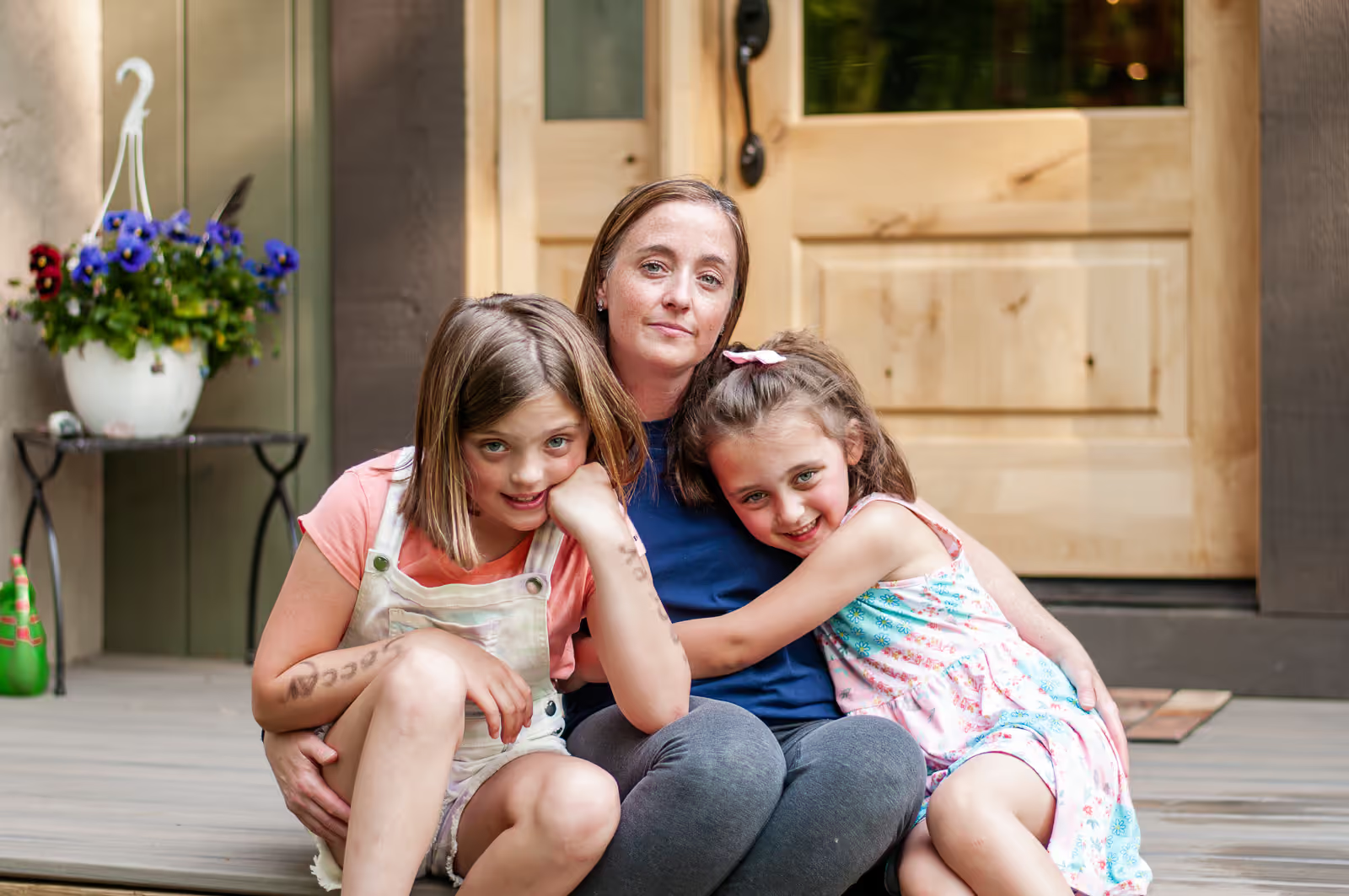
Harley Jacobsen was a husband, a father, and a friend of Mural’s founder, Sam. When Harley was diagnosed with ALS, a clinical trial was the only treatment option left. He and his wife, Maureen, said yes — anything to extend his life and give them more time together with their two young children.
In one year, Harley and Maureen made 14 overnight trips from Philadelphia to Massachusetts. They received $2,250 in study support against roughly $19,000 in costs. Friends, family, and a GoFundMe covered the rest. Every hour spent raising money was an hour away from just being together. Having that money fully covered by the trial wouldn’t have brought Harley back, but it would have brought back time. Instead, Harley’s participation cost them that time, their mental and emotional health, and the life they envisioned for themselves and their kids.
After Harley passed, Maureen learned he had been on placebo, so he never even received the experimental treatment. Harley did not benefit from the trial, but the sponsor still did, because his participation produced the data they needed. This is true of every participant, placebo or not.
Years later at an industry event, our team heard about a tax problem that would end up being related: study payments were being reported to the IRS as taxable income — money that often only covers part of what participation costs, counted as if participants had earned it. We thought of Maureen and asked her about it. We learned she had lived it, too:
After Harley’s passing, a 1099 came in the mail for the support her family had received. That's where the Harley Jacobsen Act began, and it’s why we're building Mural the way we are, centered around removing the costs and burdens that families like Harley's are left to absorb.
But protecting payments from being taxed is only one side of the coin
In October 2023, we drafted a letter to Congress asking for an income exclusion on all participant payments in all clinical trials. More than 400 of you signed it. That proposal became the Harley Jacobsen Act, now introduced in both the House and the Senate with bipartisan support (H.R. 4184 / S. 5127). The Act, if passed, would protect trial payments from being taxed, which means no risk to eligibility for participants who benefit from SNAP, WIC, or Medicaid. What the bill can't do, though, is require the payments to be made in the first place. That's the other side of the coin — and it's the question the government just opened, asking whether payments should have clear legal protection. Our comment says yes, and asks them to go further and require a minimum level of support on every trial.
Paying participants has never been illegal, but certain payments can create concerns about potential violations of anti-kickback laws, so companies that offered financial support took on some uncertainty to do it. To help address that, over two decades, OIG issued ten favorable opinions, all for covering insurance costs — never travel, never childcare, never a stipend (source: OIG's RFI). Ten opinions in twenty years says a lot about how unclear the rules are.
Why now?
Partly because clarity is needed, and partly because the US wants to protect its lead in clinical R&D (China's share of clinical trials has grown dramatically in just a few years). So competition may have opened this door more than conscience did, but the government's own reform roadmap names the financial hardship of participation — copays, surprise tax bills, threatened benefits — as part of the problem. Whatever the motivation, they're finally asking, and it's critical the industry responds. We encourage you to use your voice.
What our comment asks the government to do
On August 7, we submitted our comment to the docket with five recommendations:
- Establish a minimum standard of financial support on every trial, disclosed in the informed consent form, so participants know what they'll receive before they say yes.
- Require sponsors to carry participants' standard of care during the trial — taking Medicare and Medicaid out of the transaction and eliminating the legal excuse for not paying participants.
- Make exploitation reviewable. Boards already screen for overpayment; underpayment should be a protection failure too.
- Fund the oversight office. The HHS office responsible for IRB inspections runs on roughly 10 staff.
- Pass the Harley Jacobsen Act, so accepting money for gas or childcare can't cost someone their SNAP, WIC, or Medicaid.
The comment references the HHS’s own data, the Jacobsen family’s story, and a 2025 survey of clinical trial participants conducted by the Patient Kindness Group at Mural Health. Of those surveyed, 58% received no reimbursement at all, and typical out-of-pocket costs ran roughly $10,000. 74% enrolled to save or improve their life. 2% enrolled for the money.
The Harley Jacobsen Act exists because 400+ people took time to read and sign our letter. The survey exists because participants were willing to talk to us about their financial experience. The Jacobsens' story is part of the record because Maureen chose to tell it.
We encourage you to add your voice
Comment by 5pm ET on August 24. It doesn't need to be polished or formal, just describe your own experience in your own words. Some thought starters:
If you've participated in a trial, or cared for someone who did:
- What did participation cost you or someone you love?
- Did anyone ever review whether the support you received was adequate?
- What would support that actually covered your costs have changed for you?
If you work in trials, you've seen these policies up close, and your perspective carries weight:
- Have you seen support keep a participant in a trial — or watched the lack of it push someone out?
- What happened to enrollment or retention when a study offered real reimbursement?
- Is there support you've wanted to offer but avoided because the legal ground was unclear?
Leave your comment (or read others') here:
https://www.regulations.gov/document/HHSIG-2026-0034-0001/comment
Or start with ours: https://www.regulations.gov/comment/HHSIG-2026-0034-0008
You helped us move this issue forward once. Let's do it again.
.avif)