

Getting Paid the Way People Actually Live: Bringing Local Payments to International Clinical Trials
In the U.S., people send money through Venmo. In Brazil, it's Pix. In Mexico, it's Mercado Pago. These aren't obscure apps; they're how millions of people receive money every day. But in clinical trials, participants in these countries have been stuck waiting days for international wires – all to receive money that’s lighter than expected.
When people participating in clinical research lose money just to receive their reimbursement, the system is working against them.
Reimbursements exist to offset the very real costs of participation – travel, time, childcare, lost wages, and more. Some people join trials because it's their only treatment option. Others volunteer to help advance research. The idea that participants should be grateful for access to cutting-edge science? That science wouldn't exist without them. Every participant deserves to be made financially whole for what they put in.
Over the past few years, we've watched a clear trend in the data: participants are moving away from prepaid cards, gift cards, and paper checks, and toward digital payment methods. They want funds deposited directly into their accounts, accessible fast (minutes/hours, not days), through the apps and platforms they already use. Our data backs this up. In early 2024, only 8% of participants chose digital payment methods. Today, it's 56%, while physical checks have dropped from 31% to 10%.
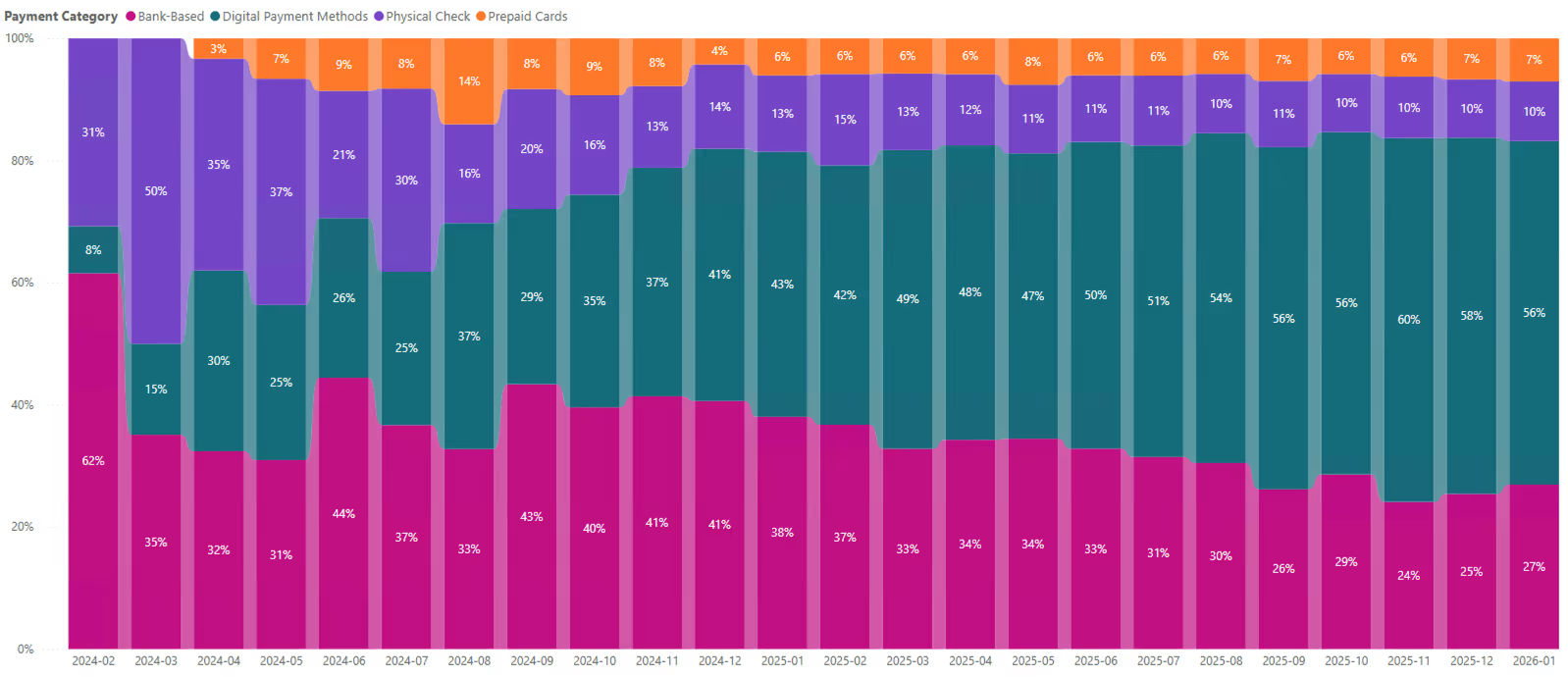
For sponsors and sites, meeting participants where they are isn't just about preference; it's about reducing friction that can contribute to dropout. But here's the challenge: in many countries, the "digital" payment options participants actually use haven't been available in clinical trials.
Why International Payments Fall Short
When a clinical trial operates internationally, paying participants often means relying on international wire transfers. On paper, this works. In practice, it creates problems significant enough that some sponsors avoid offering reimbursements in certain countries entirely, or have to contract separate local vendors for each market. This creates a patchwork of providers, inconsistent participant experiences, and operational headaches.
And in some regions, traditional payment methods don't work at all. Relying on those methods to effectively support participants is unrealistic.
We heard this directly from sites in Latin America and from our customers: the standard payment methods offered by global payment solutions simply don't address local needs and preferences of participants. Wire transfers take 3-5 days to arrive, and they often come with fees that chip away at the participant's reimbursement. Even if the sending bank's fee looks reasonable, the receiving bank abroad may charge its own fee and deduct from the amount received. Participants don't know what they'll actually get until it arrives. In some countries, payments that cross borders also trigger complicated administrative processes and drive tax implications that reduce the reimbursement and cause unreasonable burden on the participant.
And in some regions, traditional payment methods don't work at all. In Argentina, for example, over half the population is unbanked, so wire transfers aren't a viable option to rely on for Argentinian participants.
Prepaid cards and bank transfers as a default fall-back, don’t represent a comprehensive global solution. But the payment methods that are actually used daily by people, across global regions, to pay rent, split dinner expenses, purchase groceries, pay for transportation, and, even, receive their paychecks – like Mercado Pago, Pix, PicPay, Nequi and NuBank – haven't been available as options in clinical trials – until now. At a recent industry conference, we met Luis Russo, CEO of CareAccess Brazil, who spoke to the challenge directly:
"We've had participants ask why they can't just receive their reimbursement the way they receive other payments,” said Luis. “International wires feel foreign, literally. When someone is already giving their time and trust to a trial, the payment should be the easy part, not something that feels like an afterthought just because they live outside the U.S."
A Global Problem with a Local Solution
This is why we've expanded Mural Link's payment capabilities to support local payments globally (see announcement here). What does this mean in practice? Instead of sending an international wire that crosses borders (and triggers all the associated friction), Mural Link can now send funds from local banks to local banks and, where available, directly to locally preferred digital wallets. To the participant and to the banking system receiving the payment, it looks like a local transaction. No cross-border fees. No tax surprises. Just a payment arriving the way payments normally arrive.
The difference is dramatic. In recent testing, a payment to Argentina arrived within a minute of being sent. Compare that to 3-5 days for a traditional international wire.
And because these are payment methods participants already know and trust, there's nothing new to set up. The experience is familiar, intuitive, and fast.
Why This Matters
The barriers created by international payment friction are more than inconvenient; they can shape whether sponsors offer reimbursements in certain countries at all. When local teams flag concerns about fees, taxes, and delays, the path of least resistance is often to simply not pay participants in those regions, or to limit what's offered.
We've seen this firsthand. One sponsor wasn't going to allow us to handle reimbursements in Argentina because of the tax and fee issues with cross-border payments. When they learned we could make local payments, that changed. We're now handling both reimbursements and travel for their participants there. The historic approach in clinical research has been to treat markets like these as marginal – a small percentage of global participants, not worth the complexity. But it's 2026. The technology to pay people locally exists. The status quo isn't a limitation anymore; it's a choice.
That's the real impact: not just faster payments, but payments that can happen at all.
Participants everywhere deserve to be compensated fairly and promptly for their time. And sponsors running international trials need infrastructure that works globally – not workarounds that vary by country.
Meeting Participants Where They Are
The shift toward digital payments isn't slowing down anywhere. Participant expectations will continue to rise as instant, mobile-first payment becomes the norm in daily life. Clinical research payment infrastructure needs to evolve too, not just offering "digital" options in name, but truly local solutions that reflect how people in each region actually manage their money. The technology to do this has existed for a while. What's been missing is payment infrastructure in clinical research that's flexible enough to use it. That's what we've built, and what we'll keep building as new markets and methods become available.

.avif)